Mercosur Seeks New Trade Partners as Global Trade Dynamics Shift
As the global trade landscape evolves, Paraguay, a key member of Mercosur, is actively exploring new partnerships to enhance its economic resilience. This move reflects broader efforts within the bloc to diversify its trade relationships beyond traditional markets.
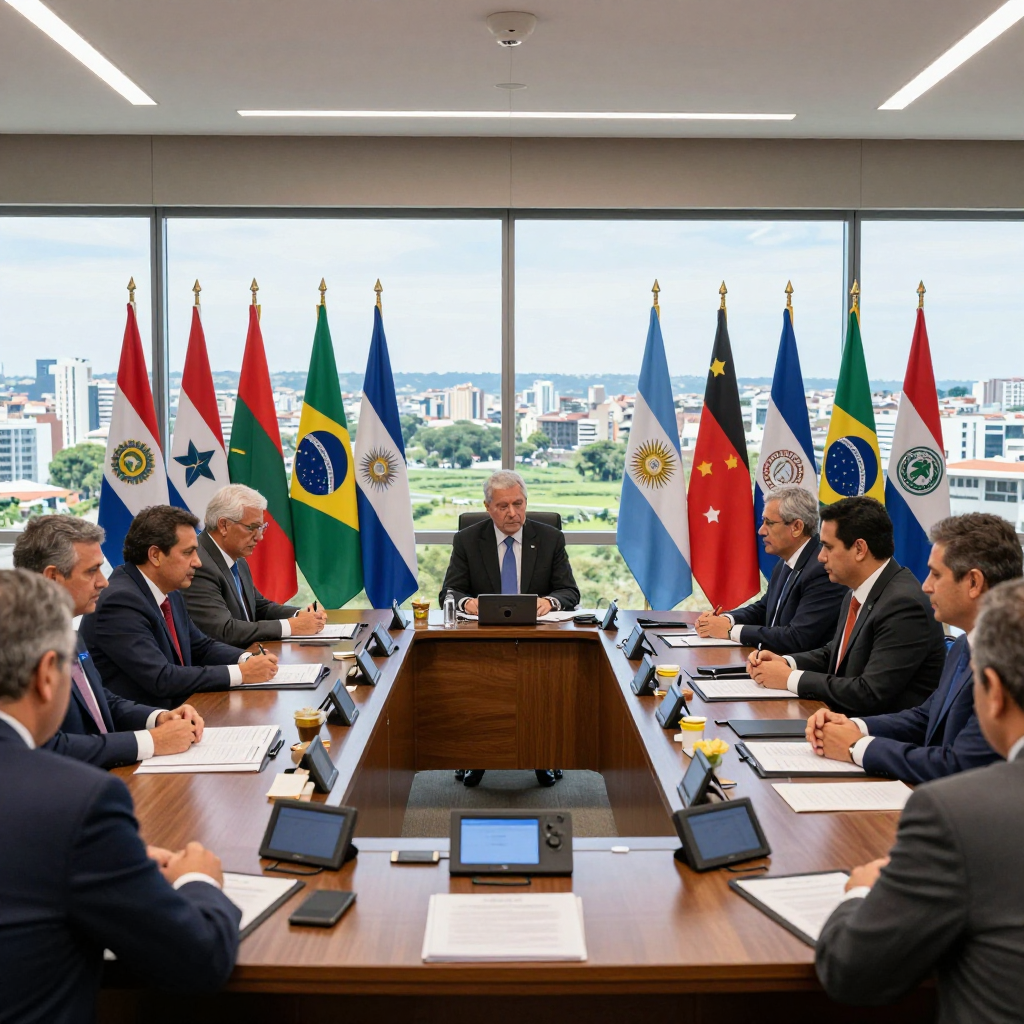
In a rapidly changing world where geopolitical shifts and trade tensions have become increasingly prominent, Paraguay, as part of the Mercosur trading bloc, is strategically positioning itself to navigate these dynamics effectively. Mercosur, which includes Argentina, Brazil, Uruguay, and Paraguay, has traditionally focused much of its trade relations on the European Union and China. However, recent developments in global trade policies, including tariffs and retaliatory measures, have prompted the need for alternative trade partners and strategies.
Paraguay's economy, heavily reliant on agriculture and natural resources, stands at a crossroads. While it benefits from preferential access to Mercosur's internal market, the country has also faced challenges such as fluctuating commodity prices and limited industrial diversification. To address these vulnerabilities, government officials have begun exploring opportunities for deeper trade agreements with emerging economies in Southeast Asia, Africa, and parts of Asia-Pacific that align with Paraguay's export profile.
According to analysts, Paraguay's focus on diversifying trade partners could provide several advantages. First, it reduces dependency on any single market, mitigating risks associated with external shocks. Second, expanding into new regions may open doors for increased investment and technological exchange, crucial for Paraguay's long-term economic growth. Third, strengthening ties with emerging markets could position Paraguay as a key player in future global supply chains, particularly in sectors such as agribusiness and renewable energy.
However, this shift comes with challenges. Establishing new trade relationships requires significant diplomatic engagement and negotiation skills. Additionally, Paraguay must ensure that these efforts do not undermine existing commitments within Mercosur, as internal cohesion is vital for the bloc's success. Recent meetings between Paraguayan authorities and potential partner nations indicate progress, but concrete agreements remain pending, reflecting the complex nature of international trade negotiations.
From a regional perspective, Paraguay’s initiatives align with broader Mercosur objectives to adapt to evolving global trade realities. Mercosur itself is seeking closer ties with countries such as Mexico, Indonesia, and South Korea, emphasizing the importance of maintaining strong intra-bloc coordination while pursuing external partnerships. As Paraguay continues its diplomatic outreach, its actions will serve as a barometer for how the entire region approaches the task of balancing regional integration with global expansion.
In conclusion, Paraguay’s pursuit of new trade partnerships is indicative of a proactive approach to navigating the complexities of modern global trade. By diversifying its trade networks, the country aims to secure its economic future while contributing to Mercosur’s broader vision of adapting to a rapidly changing international landscape.