Paraguay's Economic Reforms Spark Debate as Congress Weighs New Trade Policies
Paraguay's government is pushing forward with economic reforms aimed at boosting competitiveness and attracting foreign investment, while Congress deliberates over new trade policies that could reshape the country's role within Mercosur.
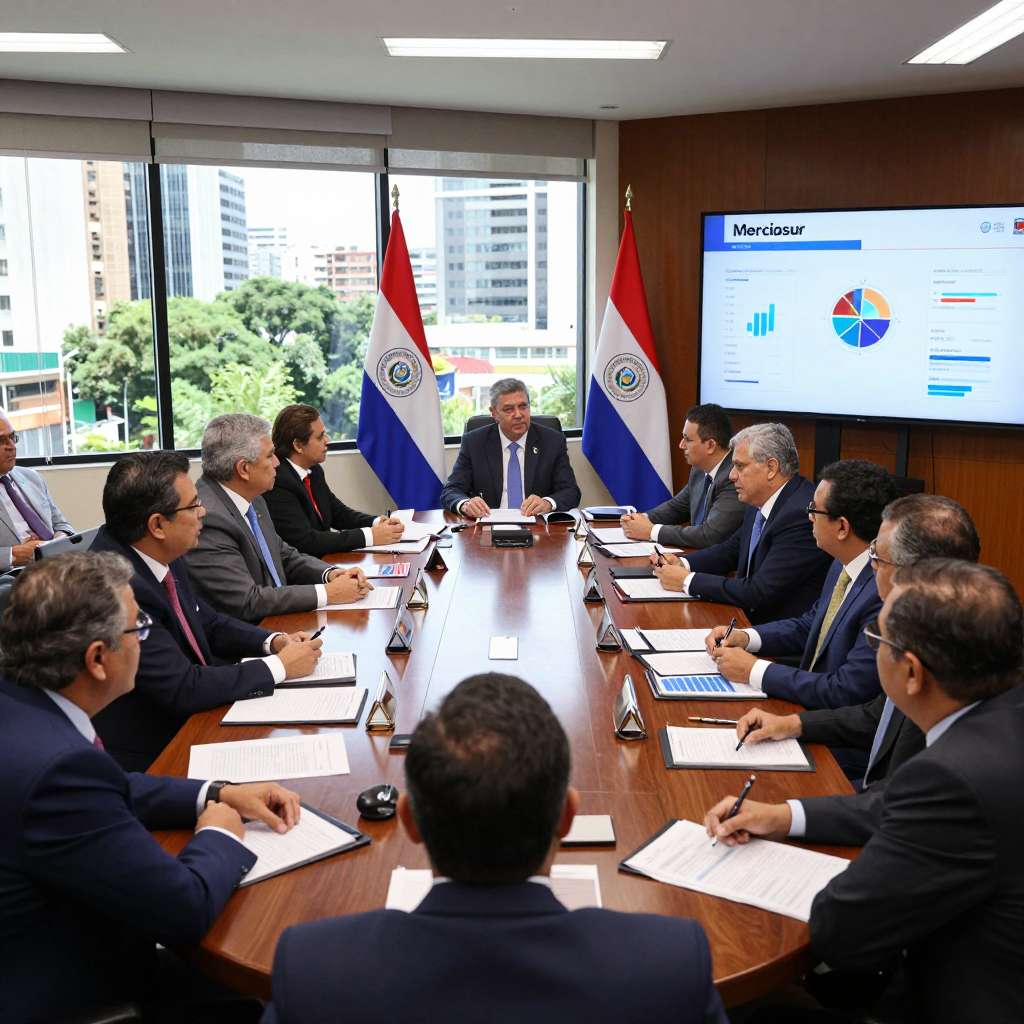
ASUNCIÓN, Paraguay — In recent months, Paraguay has become a focal point for international investors and analysts as its government embarks on a series of significant economic reforms. These initiatives are part of a broader strategy to enhance the country's attractiveness in the global market, particularly within the Mercosur bloc. Meanwhile, Congress is actively debating potential changes to trade policies that could have far-reaching implications for Paraguay’s economic landscape and its relationship with regional partners.
The reforms under discussion include measures to streamline bureaucratic processes, reduce corporate taxes, and improve infrastructure, which are seen as crucial steps toward making Paraguay更具竞争力. Government officials have emphasized that these reforms aim to attract foreign direct investment (FDI) and stimulate domestic growth. However, they have also sparked debate among local stakeholders, including businesses and labor unions, who raise concerns about job security, wage stagnation, and the potential impact on small- and medium-sized enterprises (SMEs).
Simultaneously, Paraguay’s Congress is considering legislation that could alter the country’s existing trade agreements, particularly those within Mercosur. Analysts suggest that if passed, these changes may lead to increased market access for certain sectors but could also strain relations with neighboring countries such as Brazil and Argentina, which hold more influential positions within the bloc. The proposed amendments focus on aligning import tariffs with international norms, potentially opening up Paraguay to greater competition from external markets.
Economists and policymakers argue that these shifts could position Paraguay as a hub for regional commerce, leveraging its geographic location between Mercosur and broader Latin American trade networks. However, critics warn that without careful management, the reforms could inadvertently harm local industries that are not yet competitive enough to withstand increased external pressures. The situation has drawn attention from international observers, particularly from members of the European Union and Asian trading partners, keen to assess Paraguay’s evolving economic trajectory.
As discussions continue in both government circles and legislative chambers, it remains unclear how these policy changes will ultimately shape Paraguay’s economy and diplomatic standing. Nevertheless, the ongoing dialogue highlights the delicate balance between seeking economic growth and maintaining stability withinMercosur. As the nation navigates these reforms, its approach could set a precedent for other smaller economies in the region looking to adapt to shifting global trade dynamics.
Economic experts predict that if implemented effectively, Paraguay’s efforts could lead to increased economic diversification, higher levels of FDI, and stronger integration into global markets. However, failure to address potential challenges could result in economic stagnation and exacerbate existing inequalities. The coming months will be critical as Paraguay seeks to define its role in a rapidly changing international economic order.