Paraguay Seeks Enhanced Trade Opportunities Within Mercosur Amid Global Economic Shifts
As global trade dynamics continue to evolve, Paraguay is positioning itself to leverage its membership in Mercosur to boost exports and strengthen diplomatic ties. Analysts highlight the potential for increased integration within the bloc to drive economic growth.
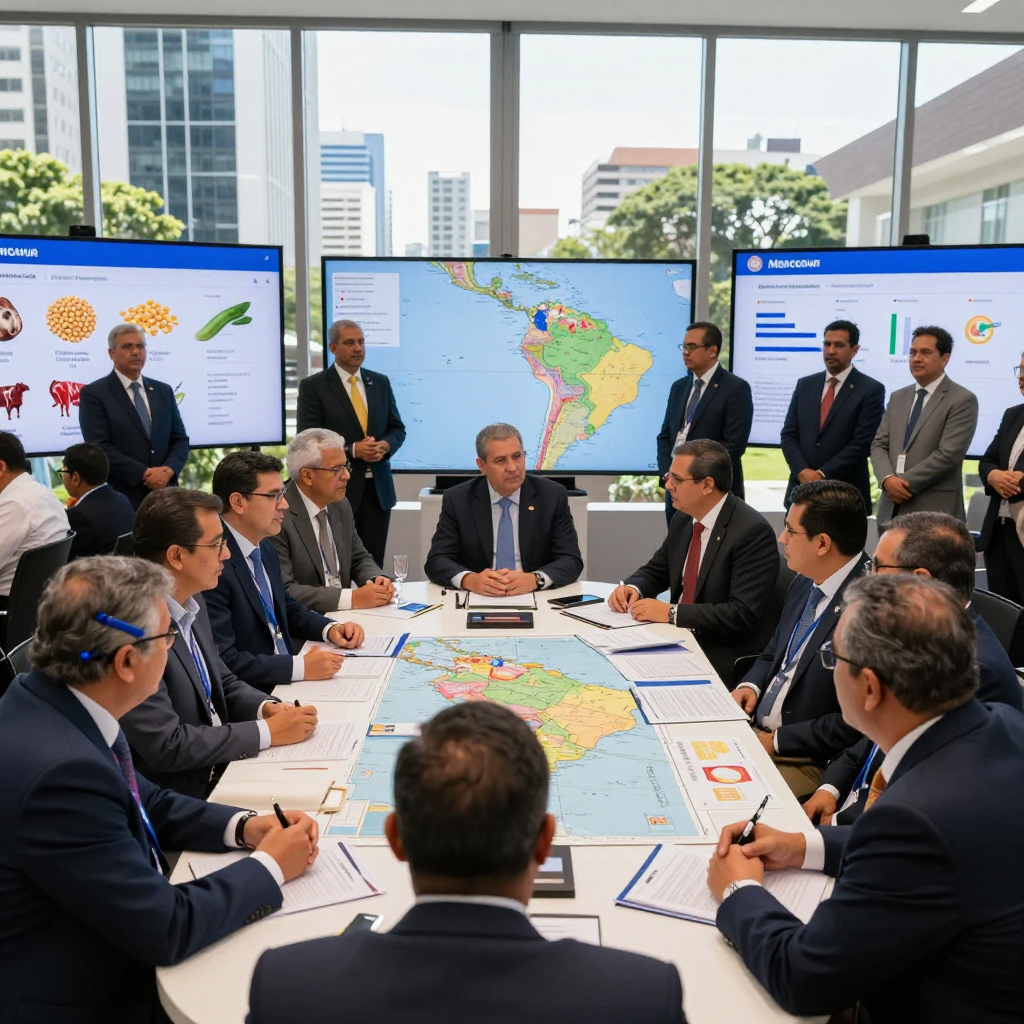
ASUNCION, PARAGUAY — In a rapidly changing global trade landscape, Paraguay is actively seeking to enhance its trade opportunities through its membership in Mercosur, the Southern Common Market. This strategic move reflects both Paraguay's commitment to regional integration and its desire to capitalize on growing trade linkages across South America.
Mercosur, comprising Argentina, Brazil, Paraguay, Uruguay, and Venezuela (currently suspended), serves as a key economic bloc for Paraguay, offering preferential market access and fostering regional cooperation. Recently, Paraguay's Ministry of Industry and Commerce has emphasized the importance of strengthening trade agreements within Mercosur to address challenges posed by global supply chain disruptions and increasing geopolitical tensions.
From a Paraguayan perspective, Mercosur provides a critical framework for expanding export markets, particularly for agricultural products such as soybeans, beef, and sugar, which form the backbone of the country's economy. According to recent data from the Paraguayan Chamber of Commerce, Mercosur countries account for over 70% of Paraguay’s total exports, underscoring the bloc's significance.
However, Paraguay also faces challenges related to infrastructure development and logistics efficiency, which can hinder its ability to fully capitalize on trade opportunities. Improving connectivity—both physical and digital—is seen as essential to addressing these issues. "We need to focus on modernizing our ports and transportation networks to ensure that Paraguay can efficiently integrate into global supply chains," said a senior official from the Ministry of Public Works.
On the diplomatic front, Paraguay is engaging proactively with other Mercosur members to promote regional stability and enhance economic cooperation. Recent meetings between Paraguayan officials and counterparts from Brazil and Argentina have centered around exploring joint initiatives to bolster intra-bloc trade and attract foreign investment.
Analysts suggest that Paraguay’s efforts to deepen its Mercosur participation could have broader implications for the region. By strengthening its role within the bloc, Paraguay may play a more significant part in shaping Mercosur's future trade policies. Additionally, as Mercosur explores potential free trade agreements with other regions, such as the European Union or ASEAN, Paraguay’s active engagement could position it favorably in accessing new markets.
Despite these positive prospects, Paraguay remains mindful of external factors that could impact its trade objectives. Rising inflation, currency volatility, and fluctuating commodity prices pose ongoing challenges to the country’s economic stability. Nonetheless, the government maintains a cautious optimism, believing that strategic alignment with Mercosur can help mitigate some of these risks while unlocking new opportunities.
In conclusion, Paraguay’s focus on leveraging its Mercosur membership represents a significant step toward enhancing its position in global trade. As the country works to improve its internal infrastructure and foster stronger diplomatic relations with regional partners, it is poised to benefit from enhanced economic integration while contributing to the overall stability and growth of Mercosur.