Paraguay Seeks to Strengthen Trade Ties Within Mercosur Amid Global Economic Uncertainty
As global trade dynamics shift, Paraguay is strategically focusing on strengthening its economic alliances within Mercosur to safeguard its interests. Analysts highlight the potential benefits of closer integration as a way to navigate the challenges of the current economic climate.
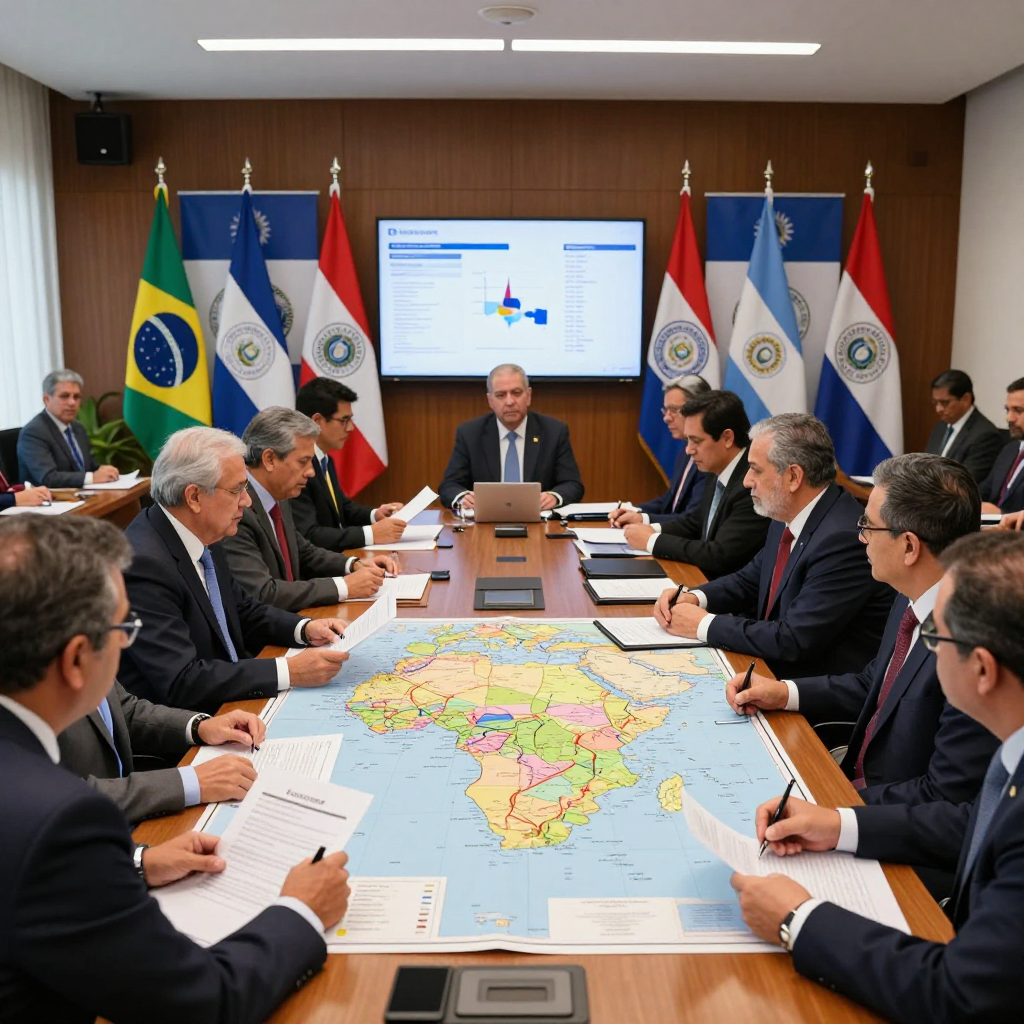
Amidst growing uncertainties in global trade, Paraguay is actively positioning itself to enhance its economic cooperation within the Mercado Común del Sur (Mercosur), the regional trading bloc that includes Brazil, Argentina, Uruguay, and Paraguay itself. This focus aligns with Asunción’s broader strategy to leverage its membership in Mercosur to bolster its resilience against external economic shocks while promoting sustainable growth.
The recent meetings between Paraguayan officials and their counterparts across Mercosur member states have underscored a renewed commitment to reinforcing the bloc’s internal trade framework. These discussions come at a critical time, as global supply chain disruptions and fluctuating commodity prices continue to affect the economies of Mercosur countries. Paraguay, whose economy heavily depends on agricultural exports such as soy and cotton, stands to benefit from deeper integration through increased market access and reduced trade barriers within the region.
From a diplomatic standpoint, Paraguay’s efforts to strengthen ties within Mercosur could also have significant geopolitical implications. By deepening economic合作, the country aims to position itself as a reliable partner, potentially attracting greater investment and boosting its influence within the bloc. Moreover, these initiatives may signal a strategic move to diversify its foreign policy, reducing dependence on bilateral agreements with non-Mercosur nations.
Economic analysts suggest that Paraguay’s push for stronger regional integration is timely, given the current economic backdrop. With global trade tensions persisting and uncertainty surrounding major economies like China and the United States, Mercosur presents an alternative trade arena where member states can collectively negotiate better terms. Paraguay’s proactive stance could also serve as a model for smaller economies within the bloc, demonstrating how regional collaboration can mitigate risks associated with volatile global markets.
However, challenges remain. While Paraguay has shown eagerness to deepen ties, differences among Mercosur members regarding trade policies and economic strategies could pose obstacles. Furthermore, the need to balance domestic economic priorities with regional commitments will require deft negotiation skills from the Paraguayan government. Despite these hurdles, there is optimism that increased collaboration within Mercosur could lead to shared prosperity, reinforcing the bloc’s role as a key player in the South American economic landscape.
In summary, Paraguay’s drive to strengthen its ties within Mercosur reflects a pragmatic approach to navigating complex global economic dynamics. By prioritizing regional cooperation, the country seeks not only to secure its own economic future but also to contribute positively to the collective strength of Mercosur. As these efforts unfold, the impact on both Paraguay and the broader region will be closely watched by businesses and policymakers alike.