Paraguay Sees Economic Growth, Eyes Strengthened Trade Ties with Mercosur Partners
Despite challenges, Paraguay's economy shows signs of recovery with steady growth, driven by robust agricultural exports and increased investment. The country is positioning itself for deeper integration within Mercosur, aiming to boost regional trade and economic collaboration.
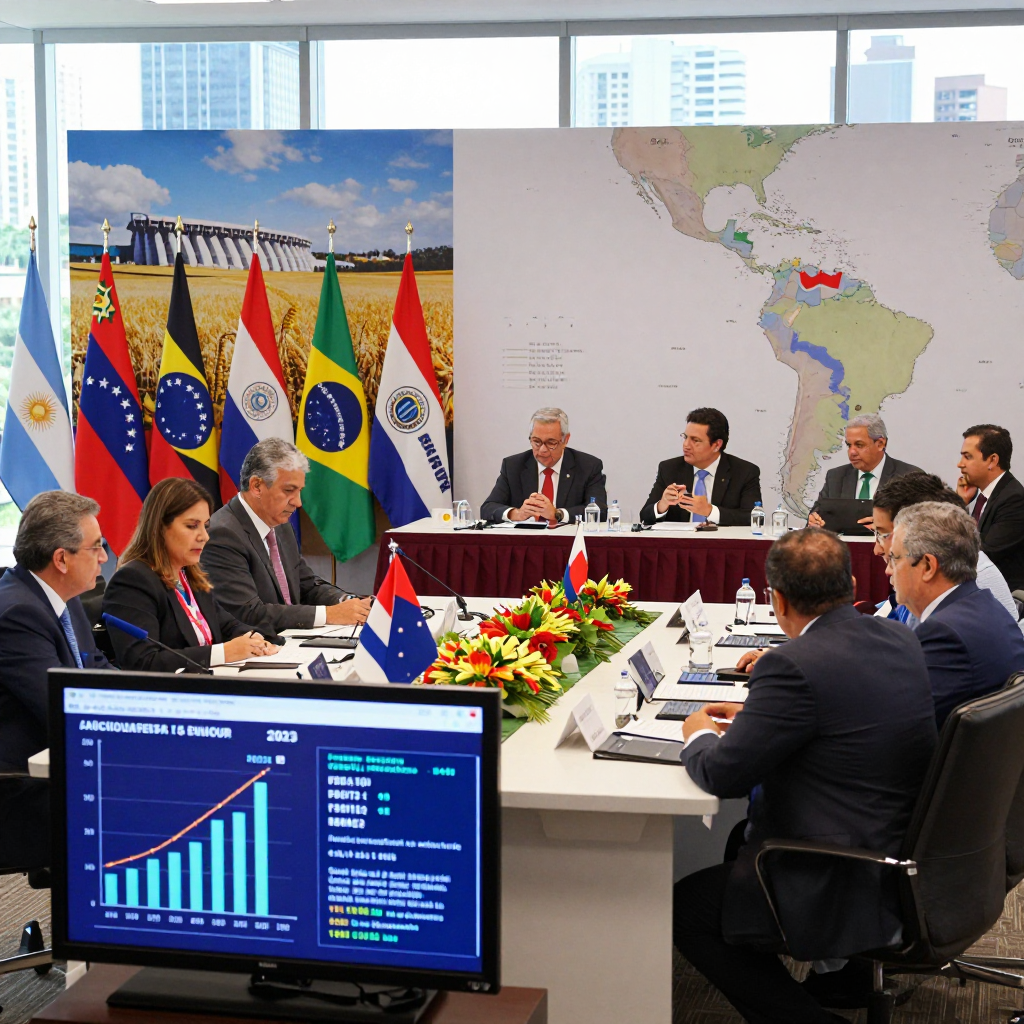
As Paraguay continues its journey toward economic stability and growth, recent indicators point to positive momentum that could have significant implications for both domestic and regional markets. The nation's economy, historically reliant on agriculture and hydroelectric power, has been showing resilience, particularly in key sectors such as soybean production and energy exports. According to reports from the Ministry of Finance, GDP growth in the first half of 2023 reached an estimated 4%, largely due to strong performance in agricultural exports, which account for over 60% of Paraguay's total exports.
Trade dynamics within Mercosur also present a critical opportunity for Paraguay. The bloc, comprising Argentina, Brazil, Paraguay, Uruguay, and Venezuela, remains a vital trading partner, accounting for approximately 70% of Paraguay's foreign trade. Recent discussions among Mercosur members suggest renewed efforts to streamline customs procedures and reduce trade barriers, which could enhance Paraguay's access to larger markets and improve competitiveness. Analysts believe that strengthening trade ties within the bloc could facilitate greater investment inflows, especially in infrastructure projects, which are crucial for connecting Paraguay's interior regions to major ports and cities.
However, challenges persist. Political volatility and ongoing disputes within Mercosur, including strained relations between some member countries, pose risks to regional integration efforts. Additionally, Paraguay faces internal hurdles, such as infrastructural limitations and a need for sustained policy reforms to attract further foreign direct investment (FDI). Nonetheless, the government has prioritized initiatives aimed at improving logistics and fostering transparency to mitigate these issues.
From an investor perspective, Paraguay offers attractive opportunities, especially in agribusiness, renewable energy, and light manufacturing. The government has launched several incentives, including tax breaks and streamlined regulatory processes, to encourage both local and international businesses to expand operations. Notably, the private sector has shown interest in expanding cross-border supply chains, leveraging Paraguay’s strategic position as a potential hub for regional trade.
Looking ahead, analysts predict that Paraguay’s focus on increasing trade and investment could lead to more balanced economic development, reducing its dependence on traditional export commodities. By continuing to engage proactively with Mercosur partners, Paraguay may play a pivotal role in reshaping the regional economic landscape, contributing to broader stability and prosperity in South America.